
About Divorce Housing Strategy
The original platform for divorce mortgage and housing planning, founded in 2011 by the creator of the CDLP® designation. The consumer-facing arm of Divorce Mortgage Planning, the professional discipline that aligns legal settlement, financial restructuring, and mortgage feasibility before housing decisions become permanent.
It started with my own divorce
The work began with my own divorce.
The settlement involved real estate and a mortgage, and I watched up close the pattern I’ve now seen thousands of times since. Every professional touched the house, the attorney, the financial advisor, the lender, and none of them coordinated about it. Each operated from inside their own discipline. The settlement was finalized first; the mortgage feasibility was evaluated second. By then the structure was set.
I came out of that experience with a clear conviction: divorcing homeowners deserved a discipline that connected the systems before the commitments were signed, not after. Divorce Mortgage Planning, the Divorce Lending Association, the CDLP® designation, and Divorce Housing Strategy all exist because of what that gap costs the people walking through it.
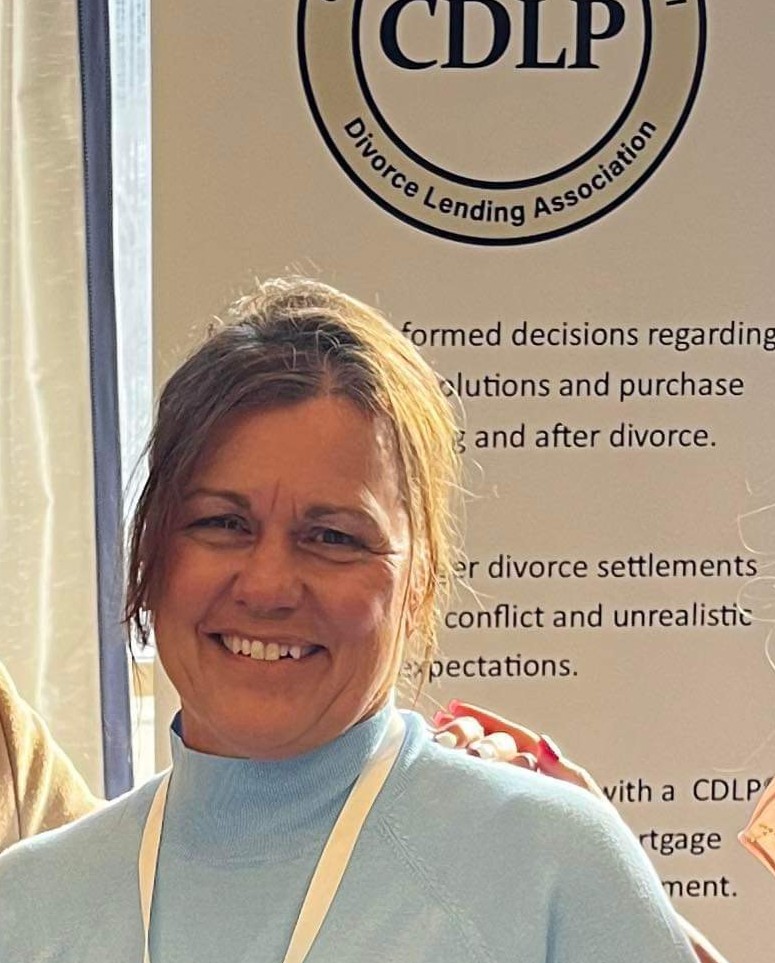
Founded by Jody Bruns, CDLP®
.png)
Jody Bruns is the founder of Divorce Mortgage Planning, the professional discipline that sits at the intersection of divorce, real property, and mortgage financing. She is also the President and Founder of the Divorce Lending Association, the body that trains and certifies practitioners in the field, and the creator of the Certified Divorce Lending Professional (CDLP®) designation.
Jody has spent 38 years in mortgage lending, with earlier roles on the corporate side of the financial and mortgage industries before founding the Divorce Lending Association in 2014. The CDLP® designation, launched the same year, was the first professional credential built specifically for this intersection. Since then, she has trained more than 3,000 mortgage and real estate professionals to work through divorce settlements with the rigor the situation demands.
Credentials and professional standing
- Founder of Divorce Mortgage Planning as a professional discipline
- President and Founder, Divorce Lending Association (since 2014)
- Creator of the Certified Divorce Lending Professional (CDLP®) designation
- Certified Mediator and Mediator Trainer
- Licensed Real Estate Continuing Education Instructor
- Approved Continuing Legal Education (CLE) Provider with multiple State Bar Associations
- Approved Continuing Judicial Education Provider
- Approved Continuing Education Provider with the CFP Board and the Institute of Divorce Financial Analysts
- Author, A House Divided | The Intersection of Divorce, Real Estate & Mortgage Financing
- Author, Anchored in Faith, A Devotional Journey Through Divorce
- Speaker and trainer at conferences, professional associations, and industry podcasts
The Structural Gap in Divorce
In most divorce settlements, the marital home is one of the largest financial decisions on the table, and one of the only ones where three independent systems must align for the outcome to hold:
- Legal settlement terms, drafted by attorneys and approved by courts
- Financial restructuring, evaluated by financial professionals and tax advisors
- Mortgage feasibility, governed by lenders and current underwriting standards
These systems operate independently by design. They were not built to talk to each other. When housing decisions are made before the three are aligned, the consequences usually surface later, in a refinance that doesn’t qualify, an income source the lender won’t count, a debt allocation that disqualifies one spouse from the home they were awarded, or a buyout the equity won’t support.
Divorce Housing Strategy was built to introduce that alignment before the agreements are finalized.
Why Housing Decisions Break Down After Divorce
Housing instability after divorce rarely begins with the house itself.
It usually begins with assumptions:
- Assumptions about refinance timelines.
- Assumptions about how support income will qualify under current lending guidelines.
- Assumptions about how shared debts will be reassigned.
- Assumptions about mortgage capacity once the household separates.
Each of those assumptions is a question with a defined answer under current lending standards. When the questions aren’t asked early, the answers arrive too late, months or years after the settlement, when there is no longer room to restructure.
The framework on this site exists to surface those questions before commitments are made.
The Divorce Housing Strategy Framework
The framework organizes housing decisions during divorce into three stages.
Mortgage Capacity Strategy Review
Most people start here, with a free consultation. The Strategy Review evaluates whether settlement expectations align with current mortgage feasibility, income structure, debt allocation, equity distribution, property feasibility, and refinance qualification, examined together rather than in isolation. The output is a clear picture of what’s possible, what’s a constraint, and what questions still need answers before settlement language is finalized.
The Divorce Housing Strategy Roadmap
For people who aren’t ready for a conversation yet. The Roadmap is a 60-minute guided, self-paced experience covering the financial and mortgage considerations most divorces miss. It’s the same framework taught in the Strategy Review, structured for individual review at your own pace.
Working with a Certified Divorce Lending Professional (CDLP®)
CDLP®-trained professionals work alongside attorneys, mediators, and financial advisors to align settlement structure, refinance timing, and mortgage feasibility through execution. The CDLP® designation is the credential built specifically for this intersection.
Built Within the Divorce Lending Association
Divorce Housing Strategy operates as the consumer-facing arm of the Divorce Lending Association, the professional body that exists to advance the discipline of Divorce Mortgage Planning and to train and certify CDLPs nationwide.
The framework on this site reflects the same evaluation principles taught in CDLP® certification, the principles relied on by professionals working with attorneys, mediators, and financial advisors on housing decisions in divorce.
When you engage with this site, you are working within an established professional discipline, not a one-person practice.
Housing decisions made under pressure often unravel.
Housing decisions made under structure hold.
You do not have to figure this out alone, and you should not have to sign anything blind. Start with a free conversation and find out what will actually work.
Jody Bruns, CDLP®